Can a compact cooking area feel open, organized, and truly work for daily life?
We believe it can. In this piece we show how modular thinking turns tight footprints into efficient zones. Amenify and other providers now offer L-shaped plans, galley runs, compact islands, and vertical storage to map tasks and movement.
We outline practical kitchen design ideas that balance storage, flow, and visibility. Pull-outs, corner carousels, and ceiling-height cabinets keep counters clear. Built-in appliances and glass elements help the room look uncluttered while staying functional for Indian cooking.
We preview finishes and lighting—gloss laminates, layered LEDs, and reflective shutters—that bounce light and expand perceived space. We also point to budget upgrades like peel-and-stick tiles and LED strips for quick refreshes.
Read on to scan solutions by layout, budget, and routine. Our goal is simple: help you find a layout that fits your life and makes daily cooking easier and more pleasant.
Why Smart Layouts Matter for Compact Indian Kitchens Today
When every inch counts, layout choices shape how we cook, clean, and live in the same room. We plan to cut steps and friction by mapping tasks to counters, appliances, and storage so daily routines run smoother.
Parallel layouts maximize narrow rooms with two runs and a clear walkway. They create an efficient work triangle between sink, stove, and refrigerator, which reduces movement during batch cooking and heavy-duty prep.
- Ceiling-height cabinets reclaim vertical space and free counters for prep.
- Handleless fronts and built-ins lower visual clutter and improve functionality.
- Reflective finishes and layered lighting make the room feel brighter and more open.
| Layout | Where it excels | Best for |
|---|---|---|
| Parallel | Efficient workflow | Long, narrow spaces |
| L-shaped | Corner storage | Open-plan living adjacent |
| Single-wall | Space saving | Studio flats, service shafts |
We stress maintenance, ventilation, and durable surfaces for oil and spice-heavy cooking. The payoff is clear: kitchen solutions that work harder, stay adaptable, and support real family living.
L-Shaped Layouts That Maximize Corners and Workflow
An L-shaped plan turns two adjoining walls into a smooth workflow that feels roomy and efficient. We use this layout to anchor prep, the sink, and the hob while keeping a safe turning radius for daily tasks.
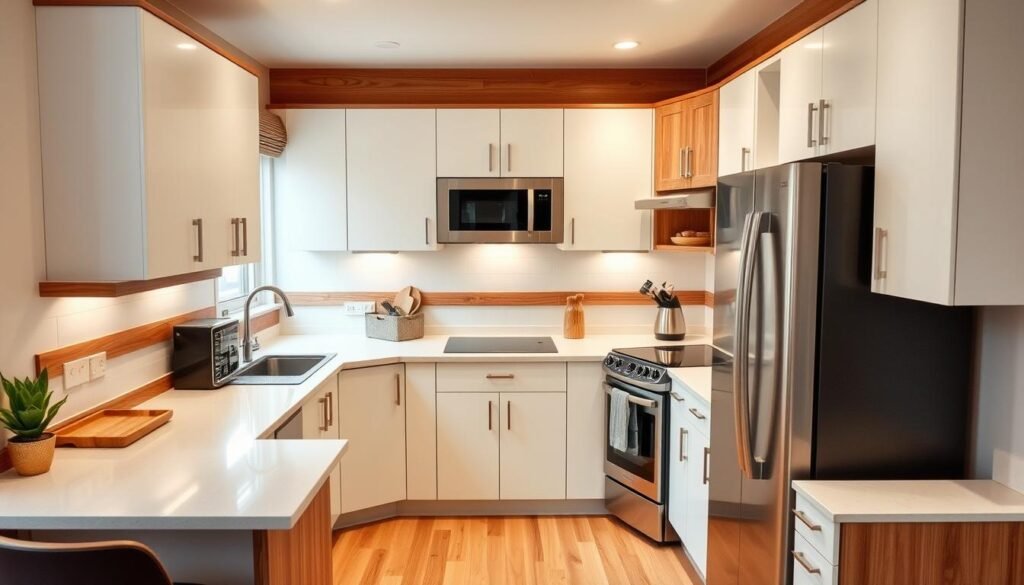
Smart drawer systems and corner carousels for dead-space recovery
We recover corner dead zones with rotating carousels, diagonal drawers, and LeMans pull-outs. These bring pots and kadais to you without crouching.
- Tiered spice pull-outs and cutlery organizers keep essentials near the hob.
- Deep utensil drawers store heavy pans, reducing clutter on counters.
- Built-in microwaves inside tall units free valuable counter span.
Open versus closed L-shaped kitchens: flow, light, and storage
Open L-shaped plans borrow light and social connection from adjacent living areas. Closed versions give more privacy and better odor control.
| Feature | Open | Closed |
|---|---|---|
| Light & flow | High | Moderate |
| Ventilation | Shared vents | Dedicated chimney |
| Storage balance | Ceiling-height units + open shelves | Full enclosed cabinets |
We recommend matte lower cabinets to hide smudges and glossy uppers for easy wipe-downs. For separation without losing brightness, choose half-height or fluted-glass partitions and a slim chimney above the hob for proper ventilation.
Parallel and Galley Kitchens: Streamlined Designs for Narrow Rooms
Parallel layouts turn a narrow corridor into an efficient, no-waste workspace. We use two runs to shorten steps and to separate wet and hot tasks for faster, safer prep.
Creating an efficient work triangle between sink, stove, and refrigerator
Place the sink and stove on opposite counters and put the refrigerator at the aisle end. This shapes an ergonomic triangle that cuts movement during heavy cooking.
Extending cabinets to the ceiling for added storage capacity
Take wall units to the ceiling to store seldom-used items up top and daily cookware below. Add tall pantry pull-outs beside the fridge to hold grains, oil, and bulk staples without crowding prep zones.
Pass-through counters to blend prep, dining, and privacy
A pass-through with a service window makes a tidy breakfast counter and keeps mess out of sight from living or dining areas. Use slim stools or a narrow bench that tucks away so the aisle stays clear.
- Match counter heights on both runs and add task lighting for balanced visibility.
- Choose handleless or slim-profile hardware to avoid snags in tight passages.
- Pick resilient finishes and strong ventilation to handle frequent cooking, and use mirrored or fluted-glass shutters to reflect light and add depth.
Compact Islands and Multipurpose Furniture for Extra Functionality
A compact island can be the multitool your cooking area needs, adding prep surface, storage, and a casual dining spot. We favor pieces that balance countertop work with hidden storage so the interior stays tidy and efficient.
Mini islands as prep zones, snack bars, and storage in open layouts
We size mini islands to keep a safe aisle for moving hot pots and to preserve flow between zones. Drawers on the working side hold knives and towels, while open shelves on the other store snacks and small appliances.
- Allow a modest overhang with slim stools to create a breakfast perch without crowding the room.
- Specify a durable countertop—granite or engineered stone—to handle chopping and hot pans.
- Use rolling carts as flexible islands that park near the hob for prep and glide away for hosting.
- Integrate power points and USBs, hook rails, and magnetic panels for everyday tools.
- Fit under-counter waste segregation to speed clean-up and keep countertops clear.
We choose finishes that match base cabinets so the island reads as built-in, anchoring open-plan layouts and improving overall functionality and visual flow.
Vertical Storage, Open Shelves, and Wall Systems to Free Countertops
Rethinking walls as active storage transforms cluttered counters into clear work zones.
We extend cabinets to the ceiling for bulk staples and appliances you use less often. This keeps the main countertop free for prep and serving.
Open shelves near the hob hold spice tins and tea jars for quick reach. We balance open shelving with closed units so essentials stay visible but not dusty.
- Wall rails and hooks for ladles and pans save drawer depth for plates and bowls.
- Adjustable shelves inside wall units let us adapt as items change over time.
- Under-shelf baskets and tray dividers add extra layers for boards and baking trays.
- A tall utility cabinet hides brooms and cleaners while keeping them accessible.
- LED strips beneath wall units brighten the worktop and improve safety.
| Solution | Best for | Benefit | Consideration |
|---|---|---|---|
| Tall ceiling cabinets | Bulk staples, rarely used appliances | Maximizes vertical storage | Use step stool for top shelves |
| Open shelves | Daily jars, spices | Easy access, visual organisation | Needs regular tidying |
| Wall rails & hooks | Pans, utensils | Frees drawer and counter space | Choose sturdy fixings |
| Glass-front wall units | Display items, reflect light | Added depth and protection | Shows contents—arrange neatly |
Built-In and Concealed Appliances for a Clutter-Free Look
Built-in units let essential appliances vanish into cabinet lines, keeping the room visually calm. We favor solutions that clear counters and preserve workflow while improving the interior look.
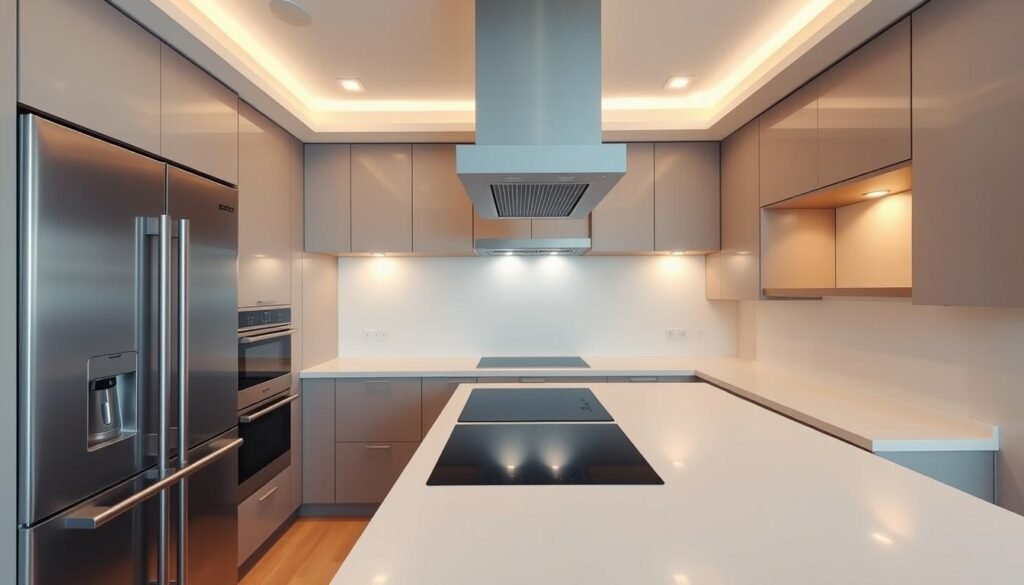
Integrating ovens, microwaves, and dishwashers within cabinets
We place a built-in microwave at chest height in a tall unit for safe access and to free counter span. Where space allows, we stack an oven and warming drawer into one tower to centralize cooking tools.
For dishwashing, an 18-inch dishwasher fits compact areas and keeps the sink zone tidy. Panel-ready fronts on fridges and dishwashers help the cabinetry read as a seamless wall.
Lift-up and retractable systems that make appliances disappear
Appliance garages with lift-up doors hide toasters and mixers while leaving them plugged in. Retractable shelves and motorized lifts bring heavy appliances to working height with no strain.
- We specify ventilation clearances and dedicated breakers to protect performance.
- Flush handle profiles prevent snagging in narrow aisles.
- Concealed bins and integrated water purifiers reinforce a clutter-free look.
Reflective Surfaces, Glass, and Lighting That Make Small Kitchens Feel Larger
When we use glass and gloss thoughtfully, the room seems deeper and more airy. Reflective laminates, polished tiles, and glass shutters bounce ambient light. They also clean easily after oily cooking sessions.
Gloss, glass shutters, and mirror tiles
We place high-gloss laminates on selective cabinet fronts to amplify brightness. Glass shutters on upper units showcase glassware while keeping dust away. Mirror or reflective tiles behind the hob boost perceived depth above the worktop.
Layered lighting for clarity and mood
We fit under-cabinet LEDs for task light, pendants over islands or ledges, and bright ceiling fixtures for even ambient coverage. Choosing warm-to-neutral color temperatures gives clear visibility without harsh glare.
- Use dimmers on pendants to switch from prep to entertaining.
- Match metal finishes—brushed steel or brass—for cohesive reflective accents.
- Place switches by task zones so lighting stays intuitive for daily use.
Color and Style Moves: Monochrome, Minimalism, and Bold Accents
We use colour to control mood and scale. A monochrome scheme in soft grays, beiges, or pastels unifies the palette and calms visual noise.
Minimalist strategies keep lines clean. Push-to-open, handleless fronts, flush toe kicks, and built-in appliances reduce clutter. Simple lighting finishes the look and keeps tasks clear.
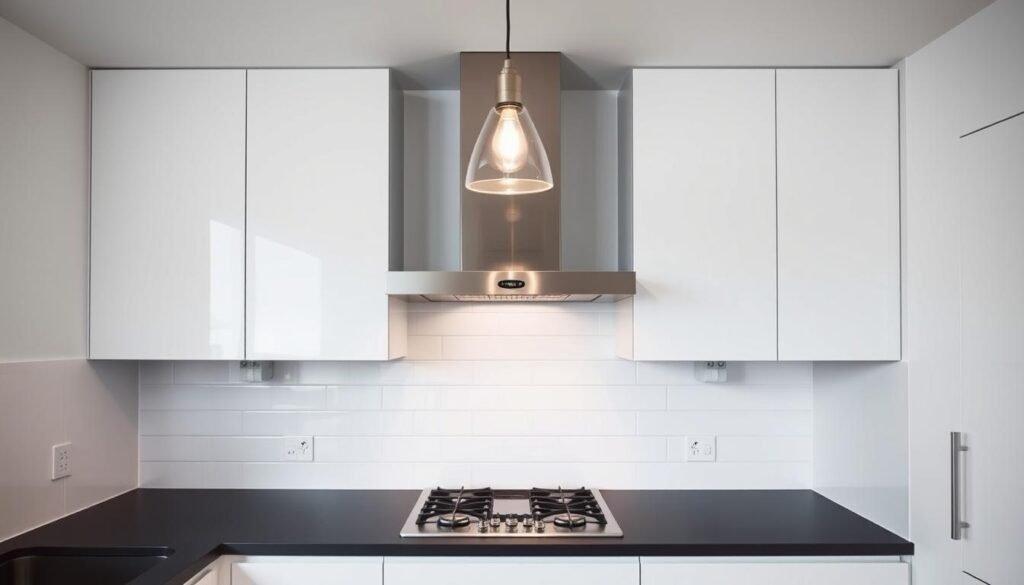
- Apply monochrome palettes to create cohesion and soothe busy surfaces.
- Introduce a bold accent—deep blue or sage green on cabinetry or one wall—to add focus.
- Use texture shifts: matte bases with glossy uppers for depth without excess pattern.
- Pick low-VOC paints and match hardware finishes for a coherent style direction.
| Approach | When to choose | Result |
|---|---|---|
| Monochrome | To calm visual clutter | Unified, elegant look |
| Minimalism | To streamline workflow | Clean lines, easy maintenance |
| Bold accent | When you want a focal point | High impact, balanced by neutrals |
We document sample boards before final decisions. This helps confirm the kitchen look under real light and ties the scheme to living areas for smooth interior design continuity in our homes.
Materials Like Natural Stone and Sleek Chimneys That Elevate Performance
Durable slabs and streamlined extraction make daily cooking easier and the interior more cohesive. We choose materials like natural stone for surfaces that handle heat, heavy use, and Indian cooking routines while keeping maintenance predictable.
Stone choices and practical details
We favor granite for rough-and-ready prep, marble for classic veining with regular sealing, and slate when texture and slip resistance matter.
- Use the same slab for backsplash to reduce joints and simplify cleaning.
- Pick edge profiles—pencil, bevel, or bullnose—that resist chips in tight aisles.
- Plan sink cutouts and reveals precisely to stop water creep and staining.
- Choose a slim chimney sized to the hob width with strong suction for tadka and frying.
| Material | Strength | Maintenance |
|---|---|---|
| Granite | Heat and scratch resistant | Seal annually |
| Marble | Elegant veining | Seal often; avoid acids |
| Slate | Textured, non-slip | Simple cleaning; seal as needed |
We match chimney finishes to appliances and pair stone with warm laminates to soften the hard-working look. Where budgets demand, we recommend durable alternatives that mimic stone while keeping heat and stain resistance.
Walls, Floors, and Ceilings: High-Impact, Space-Savvy Design Elements
We use floors, walls, and ceilings as active elements to shift perception and function in compact kitchen layouts. Patterned vinyl, checkerboard motifs, and mosaic tiles add movement that widens narrow corridors and lifts the overall look.
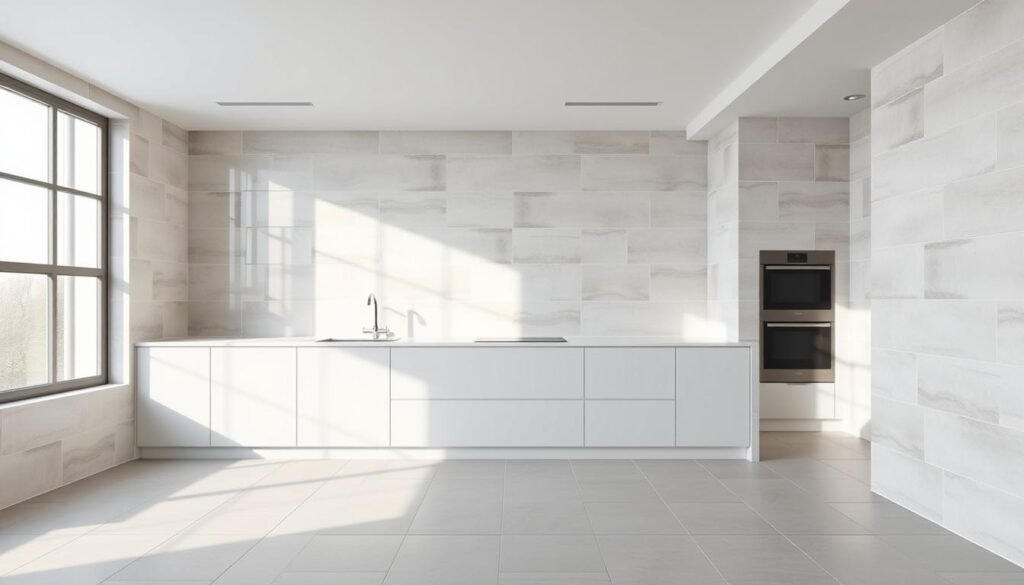
Patterned and glossy floors for depth and reflectivity
Glossy finishes and mosaic floors bounce light into work zones and make the room feel brighter. Painting or stenciling an existing floor is a budget-friendly idea when full replacement isn’t possible.
Ceiling color and wallpaper to create height
A vibrant ceiling or patterned paper draws the eye up and creates the illusion of height. Keep walls lighter when floors or ceilings carry stronger patterns to maintain balance in the room.
- Coordinate backsplash tiles with floor tones to avoid visual clashes.
- Use moisture-resistant paints and primers near the cooktop and sink.
- Delineate zones with subtle floor pattern shifts while keeping thresholds flush.
- Add washable finishes behind bins and feeding zones for easy upkeep.
- Integrate wall lighting to wash surfaces and reveal texture without cluttering counters.
| Element | Option | Benefit |
|---|---|---|
| Floor | Patterned vinyl / mosaic tiles | Widened perception, reflective bounce |
| Ceiling | Paint or wallpaper | Added height illusion, playful focal point |
| Wall | Light paint + washable finish | Balanced backdrop, durable near wet zones |
Budget-Friendly Small Kitchen Design Ideas We Love
Clever tweaks and affordable materials let us refresh a compact area quickly and with real impact. These ideas focus on easy installs, better storage, and brighter interiors that suit daily life in many homes.
Peel-and-stick backsplashes, paints, and open shelving
We refresh backsplashes with peel-and-stick tiles for a fast, low-cost upgrade that handles spills. Repainting cabinet doors in light tones expands the feel of the room and modernizes the palette.
Removing select cabinet doors creates open shelving for plates, cups, and everyday items. Open shelving keeps essentials in reach and cuts cabinet clutter.
Lighting, foldaway furniture, and repurposed storage
LED strip lights under wall units give bright, efficient task lighting without rewiring. A foldable dining ledge or drop-leaf table tucks away after meals and frees floor space.
- Repurpose a bookshelf as a pantry and use baskets for grain and snacks.
- Mount magnetic strips for knives and spice tins to clear drawer space.
- Slot tension rods vertically to stand baking sheets and boards upright.
- Make DIY pendants from baskets or jars for character on a budget.
- Repaint or stencil floors to refresh the interior without full renovation.
How We Tailor small kitchen design indian homes for Real-Life Living
We begin by studying the site — light, service shafts, and everyday movement — so the final plan fits real family routines. This first step shapes a kitchen design that prioritizes reach, safety, and easy cleanup.
Custom layouts, quality materials, and end-to-end execution
We translate needs into custom modules: corner carousels, pantry pull-outs sized for staple grains, and built-ins that free counters. Our teams specify materials that resist oil, heat, and humidity while keeping maintenance simple.
Ventilation and lighting are coordinated early. Sleek chimneys, make-up air planning, and layered task lighting improve air quality and usability during heavy cooking and evening living.
- End-to-end execution syncing civil, electrical, and carpentry timelines to limit disruption.
- Transparent budgets with alternates that protect performance without overspend.
- Mockups and samples so final finishes match how your family lives.
| Phase | Focus | Outcome |
|---|---|---|
| Site study | Services & natural light | Layouts that suit real routines |
| Specification | Materials & built-ins | Durable, low-maintenance finishes |
| Handover | Care plan | Long-term functionality and living ease |
Conclusion
In closing, we highlight how a few targeted choices can stretch space and sharpen workflow for any kitchen layout.
Thoughtful planning—L-shaped or parallel plans—creates efficient zones. Vertical storage, ceiling-height cabinets, and open shelves free counters so daily tasks run smoother.
Built-ins and concealed systems tidy worktops and speed cleanup. Reflective finishes, glass details, and layered LED lighting add depth and brightness to compact kitchens.
Durable materials like granite, marble, and slate pair with slim chimneys to boost performance. Quick wins such as peel-and-stick tiles, LED strips, and cabinet repainting stretch budgets without compromise.
We encourage a monochrome or minimalist palette with a bold accent to tie interior design and personal style together. Map your priorities—storage, seating, or speed—and pick the ideas that fit your home. The goal is simple: a kitchen that looks great, works hard, and supports everyday living with ease.