Can a few well chosen lights make our garden feel like an extension of home and culture?
We begin by explaining how a thoughtful courtyard plan blends tradition with modern tech to shape first impressions and everyday use. Small, layered illumination creates ambience, guides movement, and highlights key features without glare.
LEDs are the backbone for most outdoor lighting now: they last longer, use less power, and offer flexible brightness from 50–300 lumens for paths, plants, and focal points. We also recommend sealed, weatherproof fixtures and stainless or UV‑resistant materials to withstand monsoon and heat.
Our guide shows how to map the area, pick fixtures by zone, and combine soft ceiling or wall-wash light with focused beams. We’ll include practical tips on solar options, motion sensors, and integrating festive elements like diyas and fairy lights so the space works for daily life and celebrations.
Understand Your Courtyard: Assess the Space, Users, and Nighttime Goals
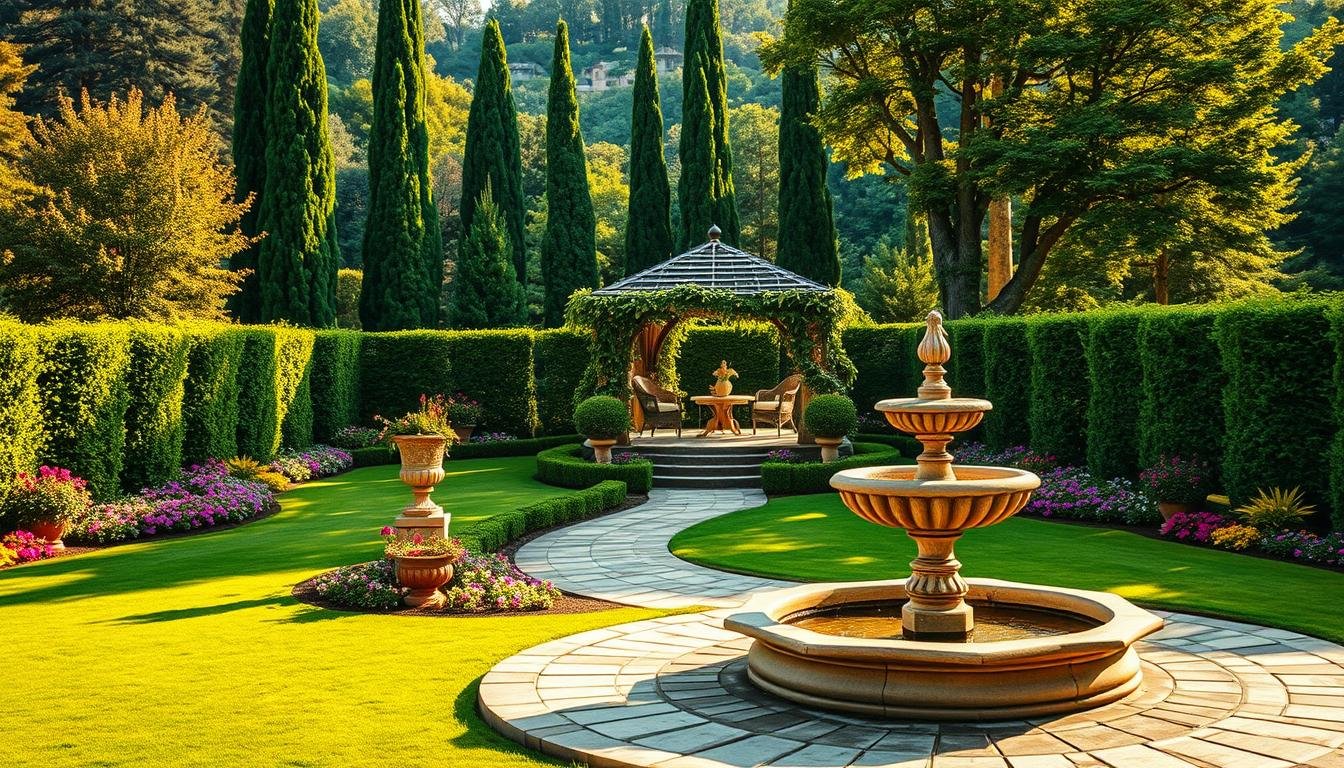
Surveying the space after sunset reveals circulation routes, trip hazards, and features worth highlighting. We start with a quick landscape assessment that lists paths, seating clusters, water edges, and trees so we know where extra illumination is needed for safety and mood.
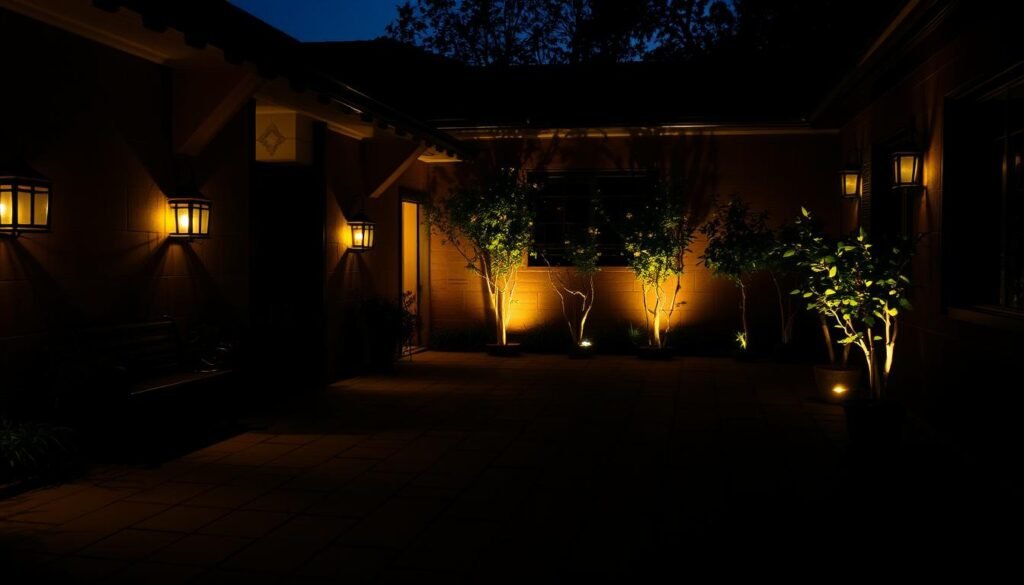
Next, we map key zones and set clear nighttime goals. Who uses the garden most? Do we prioritize family dinners, quiet reading, or safe after-dark passage? Smart motion sensors and app controls help us switch scenes for daily life and festive evenings.
- Draw a scaled plan marking entry, steps, seating, planting beds, water edges, and architectural features to place light sources precisely.
- Rank safety zones—stairs, ponds, narrow ways—so we use low-glare task lights for sure footing without over-illumination.
- Decide focal points—textured screens, a carved doorway, or a tree—so accent beams align with our focus.
| Area | Purpose | Recommended types |
|---|---|---|
| Pathways | Safe passage | Step lights, bollards |
| Seating | Dining & reading | Dimmable pendants, task lamps |
| Feature edges | Accent & festive | Spotlights, fairy lights |
Finally, we note power access, surface reflectance, and noise or street spill. This keeps our lighting design balanced, efficient, and tuned to how people actually use the home outdoors.
Plan Layered Illumination: Ambient, Task, and Accent Working Together
We layer a soft base with targeted beams and small accent sources so each area feels right for its use at night. This approach gives us control over mood, safety, and drama without overdoing any single source.
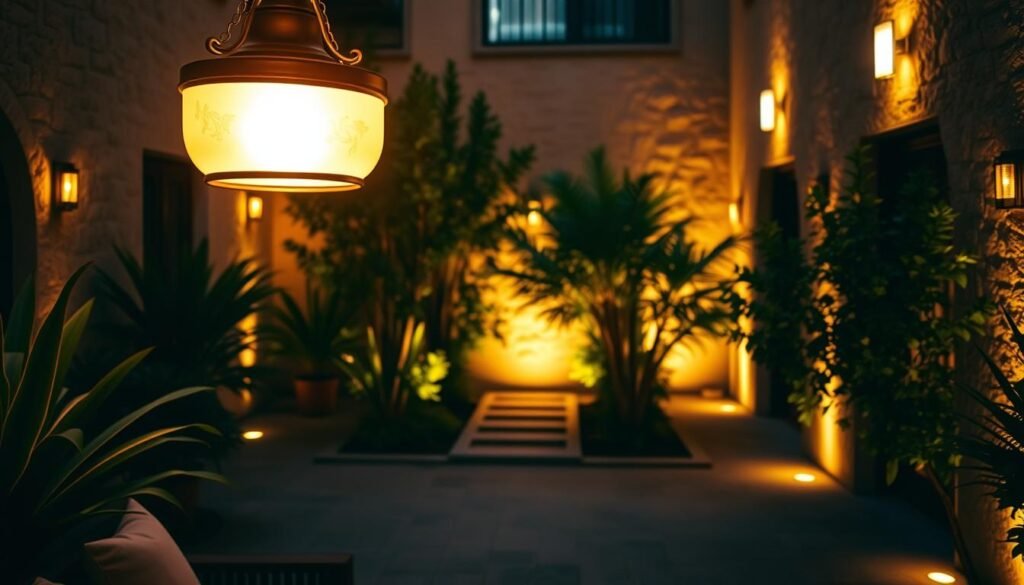
Ambient: the soft, even base
Ambient illumination offers broad, comfortable glow across seating and walkways. We use recessed downlights, ceiling coves, or wall washes to lower contrast and aid navigation.
Task: focused brightness where we need it
Task light targets steps, counters, and reading nooks. We pick shielded fixtures and directional lamps to avoid glare and to keep brightness levels safe for eyes.
Accent: sculpting features with drama
Accent sources pick out trees, textured walls, and jali patterns. Narrow-beam spots, grazers, and adjustable strips bring these features to life during evening gatherings.
- Place layers on separate circuits with dimmers for scene control.
- Match color temperature to activity: warm white for social clusters, neutral for work areas.
- Mock up at night to confirm aiming angles and avoid light trespass.
| Layer | Typical fixtures | Suggested color temp |
|---|---|---|
| Ambient | Recessed, cove, wall wash | 2700–3000K (warm) |
| Task | Downlights, pendants, step lights | 3500–4000K (neutral) |
| Accent | Spots, uplighters, LED strips | 2700–4000K (varied) |
Courtyard Lighting Design India: Traditional Character Meets Modern Efficiency
We blend festival traditions with efficient modern fixtures to keep evening gatherings warm and safe.

We plan safe perches for diyas and lanterns, then add dimmable led lights to hold a warm atmosphere. Solar string options reduce cable clutter and cut energy costs during Diwali and other celebrations.
Blend diyas, lanterns, and fairy lights with LEDs for energy efficiency
Use hooks and cable guides to keep fairy lights tidy on trees and pergolas. Choose 2700K, high-CRI sources to mimic traditional incandescent bulbs and keep colors true in fabrics and rangoli.
Respect cultural rhythms: Diwali-ready layers without glare or clutter
Prewire switched outlets at pergola tops and facade corners so festive strings run on separate circuits. Name scenes—Everyday, Festive, Late-Night—on a keypad or app so the whole family can switch moods quickly.
- Isolate diya locations from dry foliage and provide low task light for safe movement.
- Select lantern finishes like brass or blackened metal paired with modern drivers for stable performance.
- Use solar-powered options for temporary displays to improve safety and convenience.
| Source | Atmosphere | Practical tip |
|---|---|---|
| Diyas | Warm, ritual | Place on dedicated, fireproof shelves |
| LED lights | Efficient, controllable | Use 2700K high-CRI bulbs |
| Fairy lights | Sparkle, seasonal | Install with weatherproof strings and cable guides |
Choose the Right Fixtures and Light Sources for Each Zone
Choosing the right fixtures helps us control mood, safety, and long-term maintenance. We match fixture form and lumen output to each area so spaces feel intentional and easy to use at night.
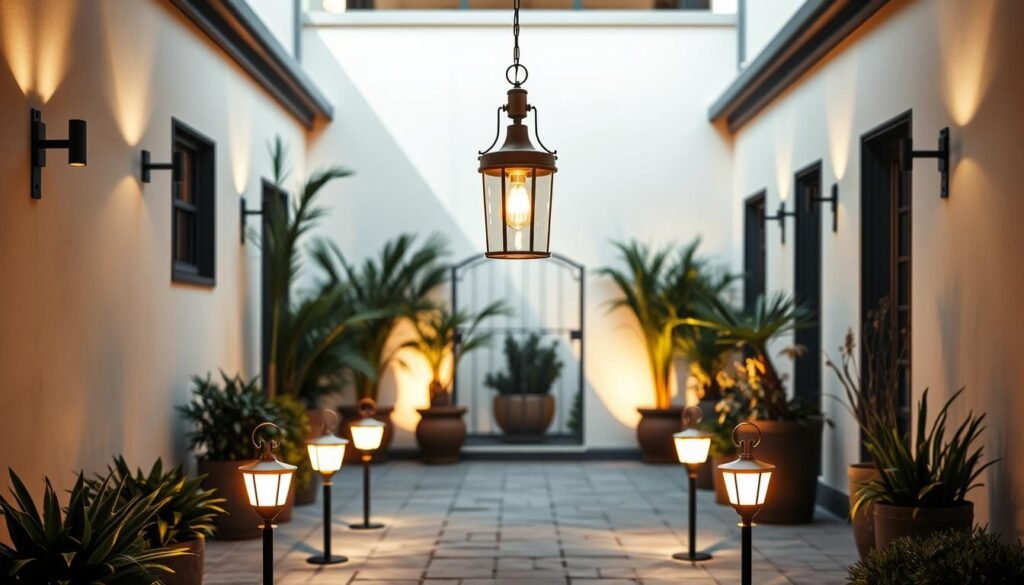
Walls and facades
For walls we prefer shielded wall sconces, directional up/downlights, and broad-beam wall washers to reveal texture evenly. Use outdoor wall fittings with cut-off optics to avoid glare toward neighbors and windows.
Pathways and steps
Step lights and low-height bollards with cut-off optics guide feet safely. Aim for roughly 50–150 lumens per point and pick fixtures with low-glare lenses for clear sightlines.
Seating and dining
Over dining, a pendant light with a downlit diffuser and dimming gives table visibility without eye strain. Size the fixture to about one-third to one-half of the table width and keep ceiling mounts shielded.
Green elements
Spotlights work for specimen trees; floodlights suit wider beds. Reserve led strip lights or strip lights for pergola beams and planter lips to create subtle floating edges.
Water features
Use sealed, submersible LEDs in low-voltage runs (IP68). Position beams across the surface for shimmer rather than pointing directly at viewers.
- Choose CRI 90+ where color fidelity matters for foliage and stone.
- Pick corrosion-resistant mounts and weather-rated drivers for durability.
- Aim fixtures away from seating sightlines and use louvers or honeycombs to control glare.
| Area | Recommended types | Typical lumen range |
|---|---|---|
| Walls & facades | Wall sconces, up/downlights, washers | 100–300 lm (accent) |
| Paths & steps | Step lights, bollards, directional lights | 50–150 lm (per point) |
| Seating & dining | Pendant light, dimmable layers | 150–300 lm (task) |
| Water & planters | Submersible LEDs, spot/flood, led strip | 50–250 lm (accent) |
We keep a coherent finish palette and matched proportions so fixtures complement the architecture rather than compete with it. This practical approach makes maintenance simpler and keeps the garden welcoming all year.
Optimize Brightness, Color Temperature, and Beam Angles
Adjusting lumen output and beam shape lets us craft scenes that suit dinner, play, or quiet reading. We tune warmth, spread, and intensity so each area feels correct at night.
Match brightness to activity
We size brightness levels to the task: 50–100 lumens for paths, 150–300 for dining and prep zones. Dimmers give us flexible control and save energy when full output isn’t needed.
Pick color for comfort and clarity
Warm white (2700–3000K) keeps seating clusters cozy. Neutral whites (3500–4000K) suit counters and work areas. We avoid cool, daylight tones that can feel harsh at night.
Shape light with beam spreads and aim
Use narrow beams (10–15°) for tight focus, medium (24–36°) for features, and wide (60°+) for ambient wash. Graze textured walls with shallow angles and keep sources recessed to limit glare.
- Use high-CRI led lights near dining to keep colors true.
- Include ceiling coves or soffit grazers to broaden soft illumination.
- Test scenes at night and leave driver headroom for small future upgrades.
| Beam | Typical use | Lumen range |
|---|---|---|
| 10–15° | Statue, trunk focus | 50–150 lm |
| 24–36° | Medium features, small walls | 100–250 lm |
| 60°+ | Ambient wash, ceiling coves | 150–300 lm |
Energy-Smart Controls and Sustainable Lighting Solutions
We focus on controls and sources that cut energy use while keeping our evening spaces flexible and safe. A mix of led fixtures and solar outdoor lights gives reliable performance and lower running costs.
Prioritize LEDs and solar for long-term savings
LEDs reduce consumption and last far longer than legacy lamps. Solar pathway fixtures add simple, off-grid backup where sun exposure allows.
Integrate motion sensors, timers, and apps
Motion sensors boost safety and avoid wasted runtime. Timers and app controls set brightness targets and schedule scenes by way of the calendar or sunset times.
Circuits and scenes for everyday and festive use
We separate circuits into Everyday, Festive, and Late‑Night Pathways. That makes changes one tap away and keeps energy low when full brightness isn’t needed.
- Specify drivers compatible with modern dimmers (0–10V, leading/trailing edge).
- Label zones in the app and on switches to simplify use for every family member.
- Document wiring and control logic for future upgrades and maintenance.
| Control | Benefit | Quick tip |
|---|---|---|
| Motion sensor | Energy saved, increased safety | Use at entries and side way |
| Timers/photocell | Consistent runtimes | Fade paths at bedtime |
| App scenes | Flexible brightness & color | Preload Everyday/Festive modes |
Style and Material Choices: From Traditional Incandescent Aesthetics to Contemporary LED Design
A coherent palette of forms and metals can turn practical light into architectural detail. We match fixture silhouettes to the home so each piece reads as part of the whole. That makes spaces feel calm and intentional at night.
Fixture finishes and forms that complement your home’s architecture
We align lanterns, slim cylinders, and heritage brackets with the facade so fixtures feel integrated. Finishes matter: brushed stainless or powder-coated aluminum resists weather, while brass or patina give a warm, traditional touch.
We coordinate wall fittings with planter edges and pergola beams so proportions flow from home to garden. Cable runs hide in plinths and planter walls to keep sightlines clean.
Achieve an incandescent glow with LED technology and proper dimming
LEDs can mimic traditional incandescent bulbs by using 2700K lamps with high CRI and deep‑dimming drivers. Warm‑diffuse lenses and frosted covers soften beams for a cozy atmosphere that reads like old filament lights.
- Use a pendant light over dining or a swing seat; size and drop height must suit wind and sightlines.
- Run outdoor‑rated led strip beneath bench overhangs and along pergola beams for subtle floating effects.
- Specify sealed gaskets, drains, and serviceable drivers so fixtures survive heavy rain without trapped moisture.
| Element | Benefit | Quick tip |
|---|---|---|
| Finish | Longevity & style | Pick stainless or powder coat |
| Warm LEDs | Incandescent atmosphere | 2700K, CRI 90+, deep dimming |
| Cable detail | Clean look, easy service | Conceal in planters and plinths |
Safety, Compliance, and Climate-Ready Durability in India
We must treat safety and durability as the backbone of any outdoor plan for a resilient garden. Choosing the right gear and following code reduces risk and keeps the space usable through heavy monsoon and heat.
Weatherproof ratings, cable management, and safe, low-voltage installations
Specify IP ratings by location: higher values for ground-level and splash zones, and IP68 for submersible led lights in ponds. Use low-voltage runs for steps, paths, and water features to improve safety and serviceability.
Route cables in conduits with accessible junctions and drip loops. Seal wall penetrations and keep driver boxes elevated in ventilated, weatherproof enclosures. Test RCD/ELCB protection and label zones for quick troubleshooting.
Monsoon-ready materials: stainless steel, UV-resistant plastics, and sealed fittings
We prefer stainless fasteners and UV-resistant housings to resist corrosion and sun exposure. Select sealed fixtures that withstand heavy rain and prevent moisture ingress around walls and architectural features.
- Choose outdoor wall fixtures and sconces with downward shielding to limit light trespass and protect night ecology.
- Verify submersible lights are IP68 and keep cable joints above the maximum water level.
- Schedule seasonal cleaning, vegetation trimming, and gasket checks to maintain consistent illumination and fixture life.
| Area | Recommended types outdoor | Quick rationale |
|---|---|---|
| Paths & steps | Low-voltage step lights, bollards | Improves safety and reduces power draw |
| Ponds & water features | IP68 submersible led lights | Sealed units avoid failures and hazards |
| Walls & facades | Downward outdoor wall sconces, strip lights | Soft ambient coverage; preserves views |
We balance compliance with aesthetics by coordinating with electricians on earthing, conduit depth, and breaker sizing. Reserve spare capacity in panels and document fixture schedules so future additions keep the garden cohesive and energy efficient for the home.
Conclusion
Good mapping, layered scenes, and serviceable hardware let a garden work as hard at night as it does in daylight.
We conclude that a clear plan, layered lighting design, and careful fixture selection create a space that looks beautiful and performs reliably every evening.
Warm-to-neutral color choices, dimmers, and right-sized brightness keep the atmosphere cozy for family meals and quiet nights. LEDs and solar help balance energy costs and longevity, while app scenes make switching simple for everyone at home.
Durable materials, sealed fittings, and safe low-voltage runs protect performance through seasonal weather. Mock up scenes at night, label circuits, and schedule basic maintenance so the lights stay glare-free and the investment lasts.
By blending tradition with modern lighting solutions, we make the yard a welcoming extension of our living spaces—timeless, efficient, and truly ours.