Can a home suite feel like a five-star retreat while staying practical for daily life?
We invite you to rethink how a room, a walk-in closet, and an ensuite can work together. Our guide shows how thoughtful interior design and smart planning make a suite feel generous and calm. We mix cultural touches like Pichwai panels and Mughal ceiling art with modern elements such as fluted wood panels and stone feature walls.
Expect clear, India-focused tips on furniture, finishes, and lighting that lift comfort without crowding the space. We cover practical upgrades—velvet headboards, high-thread-count linens, layered light—and wardrobe layouts that suit daily routines.
Whether you live in a villa or a compact apartment, our step-by-step approach helps you plan circulation, choose materials, and place the bed and storage for the best flow. Read on to build a suite that feels curated, calm, and perfectly livable.
Understanding Luxury in Indian Master Bedrooms Today
We see modern suites as calm, practical retreats that put comfort first. Our approach mixes tactile materials with smart lighting and clear circulation so a room feels both indulgent and easy to live in.
Comfort-first approach with refined materials
We layer velvet headboards, fluted wood panels, and stone feature walls so touch matters at key points. Durable floors like polished marble pair with soft throws and high-thread-count bedding to lower upkeep while raising comfort.
Hotel-suite rhythm through layered lighting
Cove strips, pendants, and wall sconces let us set different moods for reading, dressing, or resting. A lounge prelude, a smooth walk-in closet transition, and a quiet ensuite layout reduce morning noise and backtracking.
- Soothing palettes (soft grays, light blues) with earthy accents for depth.
- Craft details—Pichwai or Warli—used sparingly as focal moments.
- Materials chosen for how they age: wood warms acoustics, stone adds permanence.
| Material | Effect | Upkeep | Best Use |
|---|---|---|---|
| Marble floor | Cool, durable base | Periodic sealing | Full-floor coverage |
| Fluted wood | Warm texture, better acoustics | Dust and occasional polish | Bed-back, panels |
| Velvet textiles | Soft touch, visual richness | Gentle cleaning | Headboards, throws |
Planning the Master Suite: Bedroom, Walk-in Closet, and Ensuite Flow
A well-planned suite makes morning and night feel effortless, with each area serving a clear purpose. We start by zoning the suite into a lounge prelude, the sleep area, and a dressing buffer so routines follow a simple loop.
Zoning sleep, dressing, and lounge areas for a seamless routine
We use the walk-in closet as a shield between the sleep area and the ensuite. This reduces humidity and sound in the room while speeding up dressing tasks.
Bay windows become a quiet corner for reading or tea. A small lounge prelude helps signal the shift from day to rest.
Optimizing circulation with bay windows and lounge preludes
- Keep at least 900 mm of clear walkway around the bed to avoid bottlenecks.
- Map door swings and use pocket doors to save wall space and avoid collisions.
- Align wardrobe aisles with natural light and add concealed study nooks to hide chargers and papers.
- In compact flats, stack a sliding wardrobe and bay-seat lounge along one side to mimic larger suites.
These elements create a plan where storage and features feel purposeful. The outcome is a calm space that supports daily rituals without clutter or noise.
Luxury Master Bedroom Design India: Our Ultimate Framework
Our roadmap turns big ideas into practical steps so the suite feels calm and useful every day. We move from purpose to placement, then lock storage, finishes, and lighting to support real routines.
From concept to finishes: a step-by-step roadmap
Begin with purpose. List sleep, work, reading, and dressing needs so the plan supports how you live, not just how the room looks.
- Fix the bed on the longest wall or opposite the door for balance. Check walkways and door clearances before adding furniture.
- Lock storage early. Choose sliding modular wardrobes or a walk-in layout with drawers and lofts so circulation stays generous.
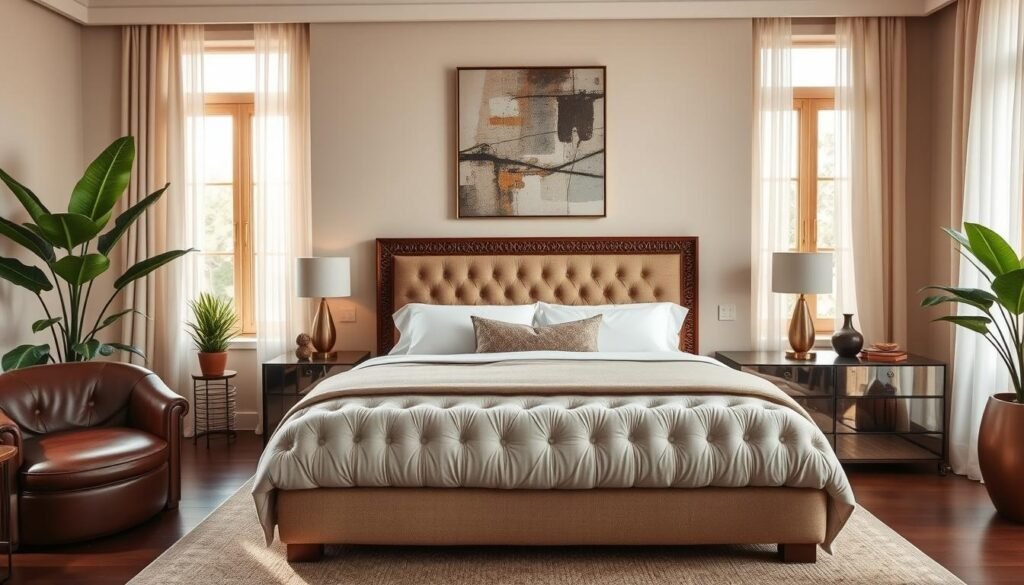
- Choose a tactile headboard—upholstered panels or fabric cladding—to soften acoustics and create a refined backdrop.
- Layer lighting: cove for ambient glow, pendants or sconces for tasks, and dimmable ceiling lights for mood control.
- Set the palette with warm neutrals as a base, then add cool accents or earthy notes to keep the room grounded.
- Specify lasting materials and finishes: engineered wood or stone floors, durable fabrics, and high-thread-count bedding.
- Sequence the suite: lounge prelude, sleep zone, then dressing and ensuite. Use pocket or sliding doors to keep flow and quiet.
| Element | Benefit | Best Use |
|---|---|---|
| Upholstered headboard | Comfort, better acoustics | Bed-back wall |
| Sliding wardrobes | Space-saving, organised storage | Longwall runs or closets |
| Cove lighting | Soft ambient glow, flexible moods | Ceilings and coves |
Signature Indian Styles Interpreted for Modern Luxury
We blend clean silhouettes with craft-rich accents so suites feel current and warm. Our goal is practical comfort that still reads as personal and carefully curated.
Modern, contemporary, and minimalist with Indian warmth
Modern approaches use low platform beds, sliding wardrobes, and simple palettes. We warm these with wood tones, soft textiles, and a single statement light to keep the room inviting without clutter.
Traditional, rustic, and craft-forward interpretations
Traditional pieces—carved headboards, brass accents, or Jaipur quilts—work best when they anchor one wall. Rustic touches like stone cladding or exposed beams add texture and age gracefully in our homes.
Eclectic and Mediterranean touches for distinctive suites
An eclectic mix must be restrained. Repeat a few tones and textures so varied art and textiles feel curated. Mediterranean cues—arches, terracotta, cane—bring airiness and pair well with plants.
- Minimalist: hidden storage, fewer pieces, calm surfaces.
- Contemporary: one bold wall or a standout fixture refreshes the room.
- Craft-led: use Pichwai or Warli selectively as focal decor.
| Style | Key features | Best use |
|---|---|---|
| Modern | Platform beds, sliding wardrobes, neutral tones | Compact homes and clean-lined suites |
| Traditional/Rustic | Carved wood, stone walls, rich textiles | Large rooms and heritage-inspired interiors |
| Eclectic/Mediterranean | Arches, terracotta floors, mixed patterns | Airy suites with layered color and texture |
Materials and Finishes That Signal Luxury
Choosing the right materials turns a simple room into a tactile, welcoming retreat. We focus on surfaces and fabrics that read as refined but stay practical for everyday life.
Velvet headboards, marble floors, and high-thread-count bedding
A velvet-upholstered headboard gives the bed a plush focal point. It softens sound and invites touch.
Marble or onyx floors amplify light and make the room feel larger. A honed or matte finish reduces glare while keeping the premium look.
High-thread-count sheets and layered bedding deliver hotel-like comfort. These textiles improve sleep and lift perceived quality instantly.
Stone feature walls, fluted wood, and inlay furniture
Stone walls—limestone, slate, or carved panels—add texture and permanence. We keep adjacent surfaces calm so the wall reads as a single statement.
Fluted wood panels warm acoustics and introduce subtle rhythm at the bedside or wardrobe fronts. Inlay furniture in bone or mother-of-pearl works best as a sparing accent.
- Pair rich textures with a restrained palette so color and decor do not compete.
- In humid cities, choose sealed stone and breathable fabrics plus good underlays.
- Finish hardware in aged brass or brushed nickel for a cohesive, upscale language.
| Material | Benefit | Best Use |
|---|---|---|
| Velvet | Plush touch, sound damping | Headboards, cushions |
| Marble/Onyx | Brightens space, premium feel | Floor |
| Fluted wood | Warm texture, better acoustics | Bed-back, wardrobe fronts |
Designing the Bed-Back Wall, Walls, and Ceiling for Impact
The moment you enter, the bed-back and ceiling should guide the eye and set the room’s mood. We focus texture and pattern behind the bed to create a single, calm focal point while keeping other walls quiet.
Textured panels, geometric patterns, and fabric cladding
Concentrate texture on the bed-back wall: fluted panels, carved stone, or fabric cladding work well. Fabric panels improve acoustics and make reading in bed more pleasant.
Mughal-inspired ceiling art, cove details, and grooves
A Mughal-inspired border or subtle ceiling motif pairs beautifully with modern cove lighting. Cove details soften the ceiling line and cast a flattering glow at night.
- Use geometric patterns sparingly on one plane to avoid a busy look.
- Add fine grooves to wardrobe shutters to echo the bed-back language.
- Keep a consistent color story: one accent hue with layered neutrals.
- Plan hidden wiring for headboard sconces and pendants during construction.
| Element | Benefit | Maintenance |
|---|---|---|
| Fluted wood bed-back | Warmth, rhythm, better acoustics | Dust and occasional polish |
| Fabric cladding | Soft touch, sound damping | Removable, washable panels |
| Mughal ceiling motif | Cultural depth, visual focus | Sealed paint, low upkeep |
Lighting Layers for a Romantic, Modern Luxury Ambience
A thoughtful light plan turns ordinary hours into cinematic moments throughout the day. We use warm layers to make the suite feel intimate and adaptable from morning routines to late-night reading.
Cove lighting, pendants, and wall sconces in balance
Start with cove lighting to wash the ceiling and remove harsh shadows. This ambient layer creates a hotel-like glow without glare.
Place pendants beside the bed to free tabletop space and frame the headboard. Add wall sconces for focused reading light and visual symmetry on the bed wall.
Dimmable ceiling lights and floor lamps for flexible moods
Install dimmable ceiling fixtures so we can move from task brightness to relaxed evening tones. A floor lamp in a bay or lounge corner creates a cozy reading nook.
Statement fixtures that double as decor
Choose one sculptural pendant or chandelier as a focal decor piece. Keep surrounding elements matte to reflect light softly and avoid harsh spots.
- Use warm-white bulbs (2700–3000K) to flatter skin and fabrics.
- Plan separate switches and dimmers for each side of the bed.
- Position mirrors to amplify glow while avoiding direct glare at eye level.
| Element | Best Use | Effect |
|---|---|---|
| Cove lighting | Ceiling coves | Soft ambient wash |
| Pendants & sconces | Bed wall | Task and framing light |
| Dimmable ceiling + floor lamp | Whole room & lounge | Flexible mood control |
With these elements in place, our bedroom design ideas blend romance and modern function. The result is a thoughtful interior design that feels both intimate and practical.
Walk-in Wardrobes and Sliding Wardrobe Design Essentials
Smart wardrobe choices make daily dressing quicker and preserve the room’s calm. We plan the closet as a functional link between the sleeping area and ensuite, so circulation and storage work together.
Planning sizes, zones, and accessories
For walk-ins, target a 1200–1400 mm clear aisle when you hang clothes on both sides. Single-wall closets work well at 650–700 mm depth per run.
Map zones for ethnic wear, daily outfits, accessories, and luggage. Add drawers at waist height for easy access and lofts for infrequent items.
- Include jewelry trays, trouser pull-outs, tie/belt organizers, and shoe racks to free surfaces.
- Use sliding systems in tight rooms; mirrored panels brighten the space and serve as dressing mirrors.
- Keep heavy storage off the floor to simplify cleaning and improve flow.
Materials, accents, and concealed nooks
Fluted glass doors show silhouettes without visual clutter and add depth to a corridor of wardrobes. Rattan or cane shutters introduce airy texture and promote ventilation for seasonal clothing.
We often hide a small study or vanity inside the wardrobe run. This consolidates furniture and keeps the sleeping zone calm.
| Element | Benefit | Recommendation |
|---|---|---|
| Strip lights with sensors | Clear visibility, low heat | Warm LED strips with door sensors |
| Soft-close hardware | Quiet, durable use | High-quality sliders and hinges |
| Carcass and ventilation | Longevity in humid homes | Durable panels, air gaps, dehumidifier provision |
Smart Space Planning for Indian Homes and Apartments
Good space planning begins with sightlines: where you place the bed shapes how you move. We start by anchoring the bed on the longest wall or opposite the entry so the room reads balanced the moment you step in.
Keep major paths free. Maintain 750–900 mm of clear circulation and check that wardrobe doors and entry swings never collide. Sliding wardrobes preserve flow in compact flats and mirrored panels boost light and perceived width.
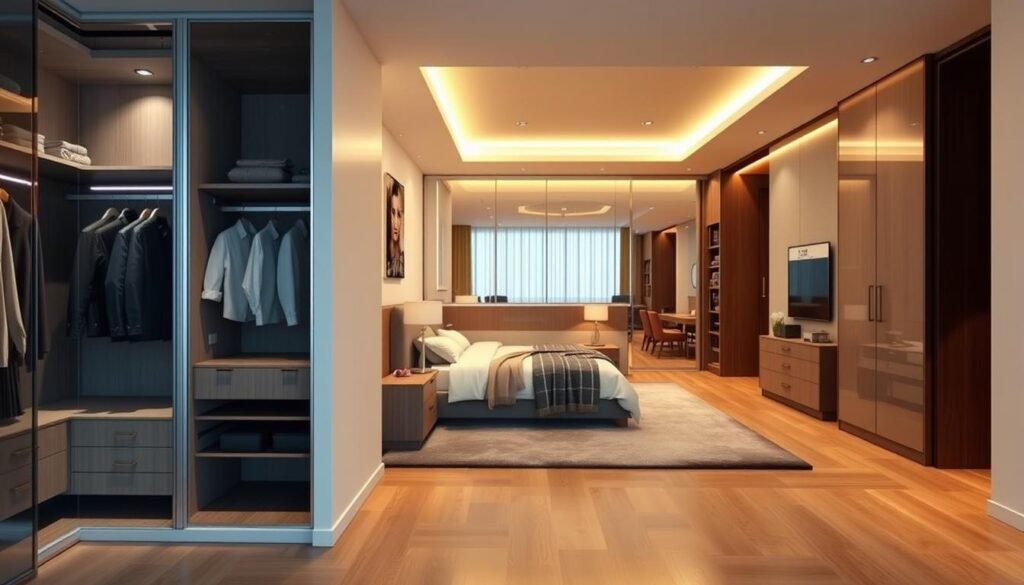
Practical steps for movement and fit
- Add furniture slowly. Fit storage first, then consider a dresser or a lounge chair only if walkways stay clear.
- Anchor a study nook in an unused corner; floating desks and wall shelves keep floors open and easy to clean.
- Use pocket or sliding doors for ensuites when space is tight to free wall space for art or storage.
We plan switchboards near bedside and study zones to hide cables and reduce nighttime glare. Align rugs with circulation to guide movement and protect flooring in high-use paths.
Finally, treat a balcony or bay as an extension of the room—use it for morning reading or light stretching. We always test layouts with tape outlines before buying furniture to avoid costly mistakes.
| Issue | Practical fix | Benefit |
|---|---|---|
| Cramped walkways | Move bed to longest wall; keep 750–900 mm clear | Better circulation and visual balance |
| Wardrobe collisions | Use sliding doors or mirrored panels | Preserves flow, adds light |
| Clutter from extra furniture | Add pieces only after storage is set; use floating furniture | Cleaner floorplan, easier cleaning |
Color Palettes: Cool Tones, Earthy Neutrals, and Bold Accents
Colour choices set the mood from the moment you walk in and shape how the room feels all day. We prefer palettes that read calm in daylight and warm at night.
Cool, calm, and fresh
Light blue with crisp white wardrobes visually expands compact rooms. Use it on the bed wall to make the space feel larger and airier.
Soft gray acts as an elegant base. It lets wood tones, metallic lamps, and art stand out without competing.
Green tints like sage and mint bring a nature-forward calm. Pair them with linen, rattan, or woven textures for a relaxed resort feel.
Depth and drama with warm accents
For depth, add clay or terracotta accents in cushions or a single feature wall. A midnight blue wall plus warm-white light creates a focused, dramatic nook.
Keep bold colours near the headboard or a lounge niche to protect the sleep zone from visual overstimulation.
- Layer neutrals on larger surfaces; add colour via bedding and art for easy updates.
- In north-facing rooms, introduce warm undertones so the palette never feels chilly.
- Always test large swatches in morning and evening light; hues shift across the day.
- Repeat one accent across textiles and small decor to tie the scheme together.
| Palette | Best Use | Effect |
|---|---|---|
| Light blue + white | Bed wall, wardrobes | Expands compact rooms |
| Soft gray + wood tones | Main walls, floors | Elegant, flexible backdrop |
| Sage/mint + linen | Soft furnishings | Nature-forward calm |
| Clay/terracotta + warm light | Accents, cushions | Depth and warmth |
| Midnight blue feature | Lounge niche, headboard wall | Bold drama with cozy light |
Nature-Inspired Calm: Plants, Grass Walls, and Natural Fibers
Plants and natural fibres make living areas feel breathable and quietly curated. We bring a simple palette of greens, earth tones, and tactile materials to calm the senses and slow the pace of daily life.
Start with hardy indoor plants such as the snake plant and money plant. They freshen air, are low-care, and add a steady green rhythm without crowding pathways.
- Use a grass wall or botanical wallpaper as one bold focal wall and keep other planes quiet.
- Choose earth-toned bedding—beige, tan, terracotta—to ground cool palettes and aid nighttime rest.
- Layer jute or cotton rugs over tile or stone to warm floors and soften acoustics.
We favour wood, cane, and rattan accents for breathability in warm homes. A linen throw, woven baskets, and a timber bench complete a nature-forward narrative that feels lived-in and calm.
| Element | Benefit | Practical tip |
|---|---|---|
| Potted plants | Airiness and visual rhythm | Place near windows; avoid AC vents |
| Natural-fiber rugs | Underfoot warmth, sound damping | Use pads to protect floors |
| Grass wall / prints | Instant biophilic focal point | Keep adjacent walls neutral |
Orient plant groups to bright corners and keep planters on drip trays to protect finishes. These small ideas help us build a sense of calm in the master bedroom while keeping interior design and decor practical for everyday living.
Art, Decor, and Cultural Touches with Indian Craft
Cultural craft anchors a room and gives the suite a distinct personal story. We use one clear gesture—art, a rug, or a carved door—to set tone without crowding the space.
Pichwai, Madhubani, Warli, and vintage finds
Anchor the bed wall with a framed Pichwai panel or a subtle Warli mural. These pieces work as single focal points and pair well with neutral textiles.
Madhubani brings lively colour; balance it with simple furniture and muted cushions. Vintage rugs and antique trunks add warmth and a lived-in feel.
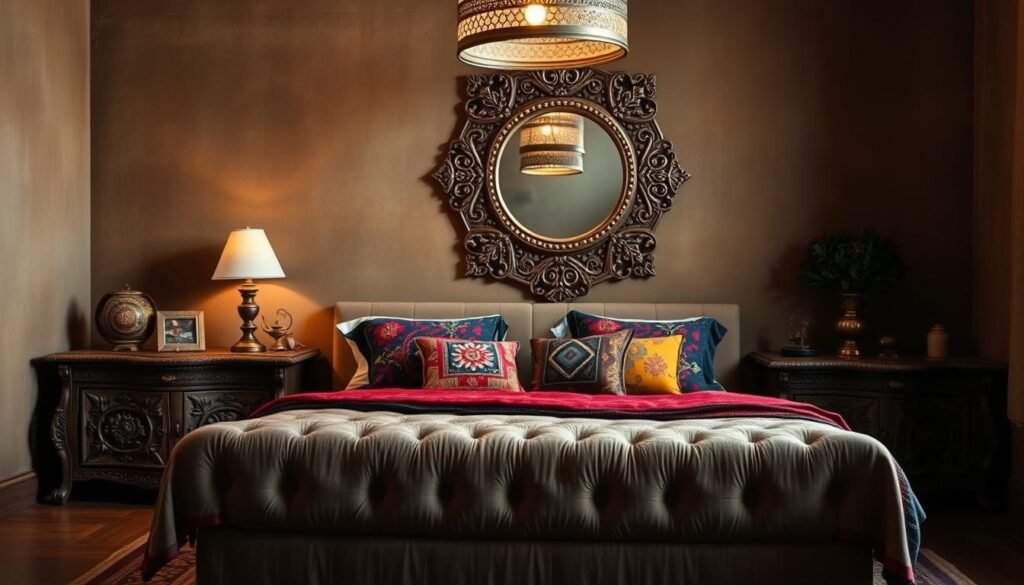
- Use brass or terracotta accents on bedside tables for small cultural moments.
- Repurpose carved doors as headboards or hang a framed textile with conservation glass.
- Rotate displays seasonally and keep surfaces curated to avoid clutter.
| Object | Why it works | Placement tip |
|---|---|---|
| Framed Pichwai | Rich narrative, calm focal point | Above the bed wall, avoid direct sun |
| Madhubani panel | Vibrant colour and folk charm | Pair with neutral textiles and simple furniture |
| Antique trunk / rug | Texture, history, grounding | Under the bed or at foot; use as storage |
Small Bedroom, Big Luxury: Storage and Layout Tricks
When space is scarce, we treat every wall and corner as an opportunity for storage and light. Smart fittings and pared-back furniture help a compact suite feel calm and very usable.
Platform beds and sliding wardrobes
Choose a platform bed with drawers or a hydraulic lift to hide linens and seasonal items. This frees floor area so we avoid extra cabinets and keep circulation clear.
- Sliding wardrobes with mirrored fronts protect circulation and reflect daylight to widen the space.
- Push the bed to one wall in singles or compact masters to create a clear walkway and a sense of flow.
- Stack storage vertically—lofts above wardrobes and tall shelving—so floors stay free for movement.
- Combine a dressing table and study into a fold-down desk to add dual functionality in a corner.
| Solution | Benefit | Where to use |
|---|---|---|
| Hydraulic platform bed | Hidden capacity, clean floor | Small suites with limited closets |
| Mirrored sliding wardrobes | Light bounce, saved door swing | Single-wall storage runs |
| Fold-down desk | Study + dressing in one | Bay or corner nooks |
Keep the palette light and layer texture—linen throws, woven baskets—for an airy, curated sense. With a few precise moves, even a small room reads refined, calm, and hotel-like.
Trends in 2025: Warm Lighting, Natural Finishes, and Multi-Use Corners
This year we’re seeing rooms move away from harsh white light toward layered amber tones and honest finishes. We favour rattan, timber, and stone for tactile warmth. These materials age well and give everyday spaces a calm, lived-in feel.
Moody palettes, suspended lights, and island beds
Warm layered lighting replaces cool bulbs. Cove strips, pendants, and sconces make softer shadows and gentler wake-up routines. Suspended lights over nightstands clear surfaces and lift the bed wall composition.
- Multi-use corners work as WFH nooks with a floating desk by a bay or a quiet wall.
- Moody palettes—deep blue, mushroom, charcoal—feel cocooning when balanced with warm light and soft textiles.
- In larger suites, island beds become sculptural and pair with a lounge prelude and a framed path to the walk-in and ensuite.
- Hidden storage—under-bed drawers and modular inserts—keeps visual noise down in urban homes.
- Smart wiring, dimmers, and app controls keep the look clean and the function simple.
| Trend | Why it works | How to add it |
|---|---|---|
| Warm layered lighting | Softens mood, improves sleep | Cove + pendants + dimmers |
| Natural finishes | Tactile, ages gracefully | Rattan wardrobes, timber headboards |
| Multi-use corners | Flexible daily routines | Floating desk near window |
Vastu-Smart Choices Without Compromising Luxury
We blend simple vastu rules into our bedroom design so the room feels calm and practical. Start with the bed: place the head toward the south or east to encourage restful sleep and a steady nightly routine.
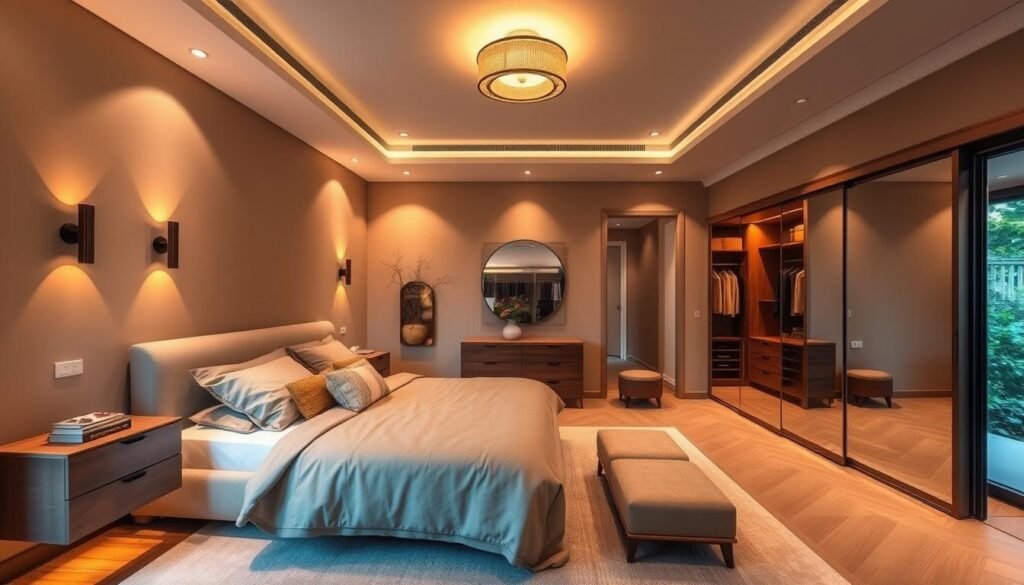
Avoid beams above the bed and do not align the bed directly with the door. A solid headboard helps the bed feel grounded and secures the sleep zone.
Position wardrobes on south or west walls and tuck mirrors inside wardrobe panels to prevent the bed’s reflection. This keeps the visual field calm and improves storage function.
- Aim attached bathrooms to the west or northwest and balconies to the north or east for better airflow and light.
- Choose earth tones, creams, and pale blues for a composed colour scheme that supports rest and comfort.
- Layer soft, indirect light and use dimmers so we can tune ambience after sunset.
| Vastu tip | Practical fix | Benefit |
|---|---|---|
| Bed orientation | Head to south/east | Improved sleep and routine |
| Mirrors | Inside wardrobe panels | Reduces restless reflections |
| Wardrobe placement | South or west walls | Better storage flow and balance |
Keep the room clutter-free with sliding doors and concealed storage so circulation stays easy. If constraints force trade-offs, prioritise bed orientation and mirror placement first. These two moves deliver the biggest sense of harmony and functionality while the rest of the interior design remains modern and personal.
Conclusion
When we sequence flow, materials, and light, the suite becomes both practical and quietly beautiful. The key elements and features—textured surfaces, layered lighting, and a clear path from lounge to dressing to ensuite—make the room feel intentional.
We’ve mapped a usable pathway for master bedroom design that balances elegance and ease. Plan the flow first, specify tactile layers for comfort, and lock storage so surfaces stay calm. Use one craft gesture to add cultural depth and keep Vastu cues where they help.
Scale these bedroom design ideas to any space. Start with one focused upgrade—lighting, the bed-back wall, or wardrobe planning—and let the interior design build from there. The result is a restful, adaptable suite that fits how we live.