Can a factory-made house truly beat site-built construction on speed, durability, and long-term value?
We believe it can, and we’ll show why. Loom Crafts has delivered over 600 units across 50+ cities, with 300,000+ sq ft manufactured and assembled. Typical delivery sits between 45–90 days, with 80–90% factory completion and a 20-year warranty on structure and leakage.
In this piece, we set clear expectations on price and scope so you can benchmark total ownership. We explain how factory-led building shortens timelines, reduces waste, and improves finish consistency.
We’ll also outline price bands—from compact glamping pods to 4 BHK villas—what’s included in ready-to-use packages, and how site realities in the city affect foundations and logistics.
Why Bangalore Buyers Are Turning to Prefab Homes Right Now
City buyers are shifting fast to factory-led builds because land is tight and schedules matter. With limited location options and narrow plots, a smaller on-site footprint reduces disruption and speeds milestones.
We see local development driven by weekend travel, hospitality demand, and second‑home purchases. Standardized units let resorts and farm-stay operators scale quickly and open rooms sooner.
Urban land constraints and speed of build
Factory-first construction shortens build time and keeps quality consistent. Most work happens off-site, so assembly on infill parcels or rooftops is far easier.
Hospitality, farm stays, and second homes on the rise
- Quick deployment of single-room cabins to 2–3BHK type cottages for short-stay use.
- Reduced onsite labour and faster time to revenue for resorts and boutique stays.
- Multiple suppliers across nearby cities boost choice, letting buyers pick the right type for their project.
- Faster builds compress financing periods and bring earlier rental yield, with fewer weather delays.
- Steel systems enable predictable assembly and smoother coordination across trades.
We advise evaluating approvals, access, and schedule early so your build path stays realistic. When planned well, this approach unlocks flexible housing options and faster delivery of finished homes.
Understanding Prefab Homes: What Counts as a Prefabricated House
We often see very different products called factory-built, so it helps to define what truly qualifies as a prefabricated houses solution. Clear definitions make approvals, design, and procurement simpler.
At one end are factory-built modules and pods. These arrive largely finished and lock together on site. Loom Crafts, for example, delivers floor, wall, and roof assemblies with 80–90% factory completion. A prefabricated house of this sort can be moveable or fixed depending on the model.
Factory-built modules, panels, and pods
Panelized systems use cut-to-size insulated panels with metal or cement facing. A steel frame is erected, then panels are joined like puzzle blocks. This reduces on-site errors and speeds finishes.
Temporary vs permanent structures and legal considerations
Legal status varies by model and local rules. Some units are classed as temporary, which affects permits, taxes, and permitted use on a farm plot.
- Type: module, pod, or panel system—pick by site and shape needs.
- Transportability: useful for seasonal use or changing family plans.
- MEP: factory precision reduces rework and ensures reliable finishes.
| Type | Factory Share | Mobility | Best use |
|---|---|---|---|
| Module | 80–90% | High | Seasonal stays, relocatable house |
| Pod | 70–90% | Medium | Studio units, glamping, resort rooms |
| Panel system | 60–90% | Low–Medium | Multi-room cottages, permanent buildings |
Checklist before you request quotes: confirm desired type, site access, legal classification, and panel facing (metal or cement). This aligns design and delivery with your intended use.
Prefab Homes Bangalore Cost: What Drives the Price
Understanding what drives the final price helps you match size and finishes to a realistic budget. We break down the main levers so you can compare manufacturer quotes side‑by‑side.
Size, layout, and number of rooms
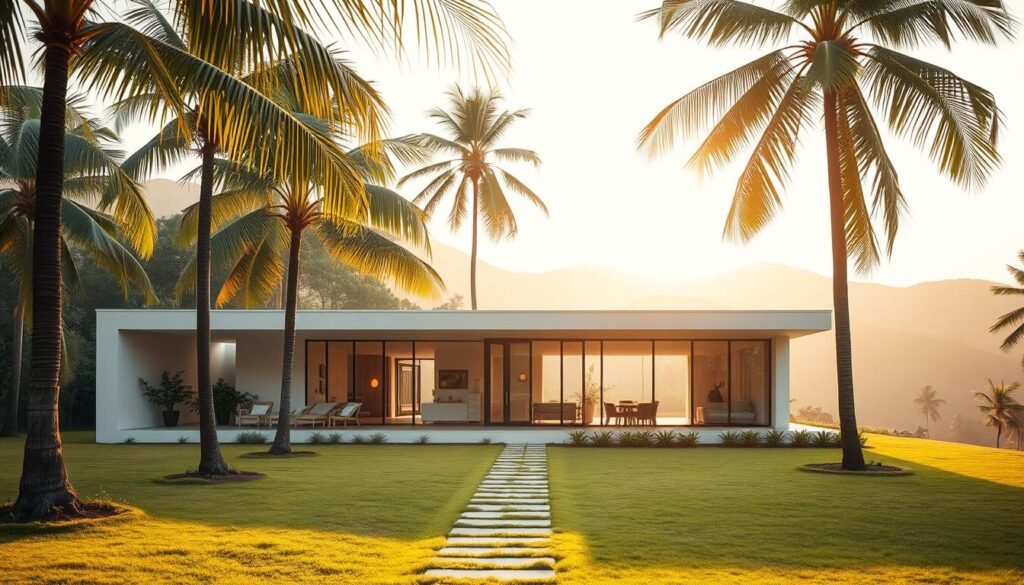
Size and layout are the biggest drivers. Studios and glamping pods start lower, while 3–4BHK units push ranges higher.
Loom Crafts examples: studios ₹10–16 lakh, 1 BHK ₹18–28 lakh, 2 BHK ₹23–47 lakh, 3 BHK ₹41–56 lakh, 4 BHK ₹65–98 lakh.
Material choices and structural systems
Steel frames and insulated panel specifications change both upfront and operating performance. A wood finish adds aesthetics and a modest premium.
Fit-outs: fixtures, flooring, roofing
Brand fixtures matter. Jaquar/Essco baths, Ashirwad CPVC, and higher-grade flooring raise the ready‑to‑use price versus a bare shell.
Site logistics and foundation options
Access, crane reach, and foundation type add transport and installation line items. Zero‑plinth installs on precast RCC blocks can cut civil work.
- Compare bare shell vs ready-to-use to avoid surprises.
- Prioritize insulation and membranes for long‑term comfort.
- Ask manufacturers for BOQs and payment sequencing to limit scope creep.
| Type | Typical Range (₹) | Key material driver | Site note |
|---|---|---|---|
| Studio / Pod | 7.25L – 16L | Insulated panel, simple steel frame | Easy transport, low foundation |
| 1–2 BHK | 18L – 47L | Upgraded flooring, branded fittings | Moderate access; crane may be needed |
| 3 BHK | 41L – 56L | Higher steel grade, insulated walls | Larger footprint, heavier logistics |
| 4 BHK / Villa | 65L – 98L | Premium finishes, custom materials | Staged delivery, detailed project mgmt |
Typical Price Bands in India and How They Translate to Bangalore
Typical price bands help you compare what a given budget actually delivers in room count, finish, and turnaround time.
Entry-level cabins and studios
Entry units start around ₹7.25–16 lakh. These include glamping pods and compact studios like ModRoom XL and SmartHouse.
They suit weekend rentals, farm house plots, and tight urban infill. Expect basic MEP, simple finishes, and fast setup.
1BHK and 2BHK cottages
1BHK (₹18–28L) and 2BHK (₹23–47L) strike a balance for small families and farmhouse stays.
Higher finish levels and branded bathroom fittings appear in mid bands. Delivery is quick but may need crane access for transport.
3–4BHK premium villas
3BHK (₹41–56L) and 4BHK (₹65–98L) target luxury living and boutique resorts.
These include premium facades, enhanced insulation, and complex logistics. Factor site planning and higher installation fees into your budget early.
| Type | Typical Price (₹) | Primary use | What’s included |
|---|---|---|---|
| Studio / Cabin | 7.25L – 16L | Farm stay, rental, urban infill | Basic MEP, simple finishes, quick install |
| 1–2 BHK | 18L – 47L | Small family, farmhouse cottage | Upgraded fittings, branded bathrooms, moderate logistics |
| 3 BHK | 41L – 56L | Family residence, resort unit | Premium interiors, better insulation, heavier logistics |
| 4 BHK / Villa | 65L – 98L | Luxury villa, boutique resort | High-end finishes, complex site plan, staged delivery |
Spotlight on Ready-to-Use Units: EcoEase and Glamping Pods
A 320 sq ft resort unit shows how efficient layout and factory fit-outs speed market entry. EcoEase by Loom Crafts is designed as a compact, self-contained cabin that balances comfort and usable floor area.
EcoEase — 320 sq ft, practical sizing and pricing
EcoEase delivers a 320 sq ft unit that starts at ₹8 lakh as a bare shell. The ready-to-use package is ₹10 lakh and includes furniture and basic amenities.
No plinth is needed; the vendor supplies precast RCC blocks for a zero-plinth install. On-site setup takes about two days, offering a fast time to operation for resorts and retreats.
What to check before you order
- Compare the bare shell and ready-to-use inclusions so you know if you must budget for appliances and linens.
- Plan utility hooks early: water, power, and waste routing make single-unit launches smoother.
- Verify last-mile logistics: crane reach, access road width, and staging reduce installation delays.
- Standardize finishes across units but allow small design tweaks to enhance guest appeal.
- Factor maintenance: membrane care, periodic checks, and warranty coverage keep lifecycle risk low.
| Item | Bare shell | Ready-to-use |
|---|---|---|
| Price (starting) | ₹8 lakh | ₹10 lakh |
| Includes furniture | No | Yes |
| On-site setup time | 2 days | 2 days |
Materials and Build Systems That Affect Cost and Comfort
The structural spine and the outer panels define a building’s weather resistance and comfort. We focus on how frame type, panel core, and cladding combine to deliver strength, insulation, and low maintenance.

Light gauge steel framing and structural integrity
Light gauge steel gives an excellent strength‑to‑weight ratio. It keeps tolerances tight and speeds assembly compared with timber or masonry. Our systems are rated for winds up to 180 km/h and heavy rainfall.
Roof, wall, and floor panels: insulation and weatherproofing
Pronto‑style sandwich panels come with metal or cement facing and rockwool cores. These panels improve thermal and acoustic comfort while limiting HVAC loads. Membranes and sealed junctions keep water out and cut onsite rework.
Cement fiber cladding, membranes, and finishes
Cement‑fiber cladding offers long life and low upkeep. Metal‑faced panels give a different aesthetic and shorter maintenance cycles. Wood and wooden finishes add warmth indoors but we advise engineered wood or sealed detailing in humid sites.
| Cladding type | Durability | Maintenance |
|---|---|---|
| Cement fiber | 50+ year design life | Low |
| Metal face | High | Moderate |
| Wood/engineered | Moderate | Sealing, ventilation |
- Map materials to lifecycle costs: membranes and coatings protect value.
- Choose panel and seal details for monsoon resilience and temperature swings.
- Factory QA on fastening reduces onsite errors during adverse weather.
Insulation and Energy Efficiency: Why Panels Matter in Bangalore’s Climate
Good insulation changes how a building performs through seasonal swings, and panels are the most space‑efficient way to deliver it.
Pronto‑style sandwich panels give the thermal resistance of a 6 ft brick wall with only 50 mm thickness. That saves interior space and lowers cooling loads.
Rockwool cores and thermal comfort year-round
We use rockwool within panel systems to stabilise indoor temperatures. Rockwool dampens daytime heat and retains cool nights, so occupants rely less on air conditioning.
Panel selection, detailing, and real-world performance
Joins, edges, and penetrations are critical. Tight seals and correct flashing keep insulation performance intact during heavy monsoons.
- Insulated wall and roof assemblies reduce energy use and improve acoustics near roads or activity zones.
- Steel framing pairs with panels to cut thermal bridging and create airtight envelopes.
- Verify claims with product data sheets and a mock‑up to confirm on-site performance.
| Metric | Benefit | Action |
|---|---|---|
| Thickness vs R-value | Brick‑equivalent in | Choose high‑density core |
| Weather resistance | Monsoon durability | Select appropriate facings |
| Installation | Quick, lightweight | Mock‑up & inspect joins |
We recommend a short checklist at procurement: confirm type of core, facing material, join details, and warranty to lock in energy and lifecycle savings.
Speed, Time Savings, and Project Planning
Compressing timelines without sacrificing quality is the single biggest advantage we offer. By completing 80–90% of the work in controlled factory conditions, we remove most weather and site variability. That lets us target delivery windows of 45–90 days from design freeze to handover.
We run site preparation and off-site manufacturing in parallel. Foundations, permits, and utility routing proceed while modules and panels are produced. This overlap cuts the total programme and lowers on-site labour days.
How the schedule typically unfolds
- Design freeze and approvals (weeks 0–2).
- Factory manufacturing and QA (weeks 2–8, depending on type).
- Site readiness, foundations or precast RCC block placement in parallel.
- Delivery, installation, and commissioning (final 1–2 weeks).
Risk controls and practical advice
Steel frames and standardized interfaces speed assembly and reduce rework during the building phase. Factory QA, sealed junctions, and logistics planning lower schedule risk.
| Area | Action | Benefit |
|---|---|---|
| Permits & inspections | Start early in parallel | Fewer hold-ups at installation |
| Logistics & crane access | Match solution to road width | Prevents last‑mile delays |
| Weather & monsoon | Plan buffers | Keeps delivery predictable |
We recommend a simple Gantt-style plan that aligns manufacturing milestones with site tasks and stakeholder checkpoints. This approach shortens project duration, reduces site overheads, and brings earlier occupancy or rental income for owners.
Quality, Durability, and Maintenance Over the Home’s Lifecycle
Durability begins with design choices that we quantify through warranties and material specs. Loom Crafts offers a 50+ year design life and a 20-year structural and leakage warranty to make long-term value measurable.
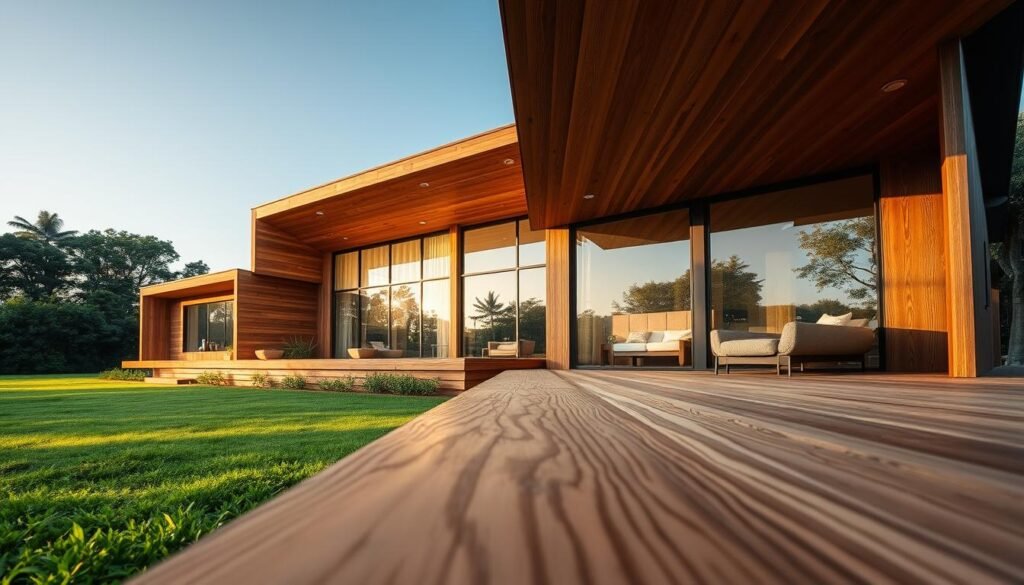
Our details protect against sun, heavy rain, and winds up to 180 km/h. Roof and roofing membranes, sealed panel interfaces, and proper flashing limit monsoon ingress and UV damage.
Steel frames resist structural loads and, when coated, cut corrosion risk. A correctly installed panel and insulation system reduces condensation and keeps interiors comfortable.
- We schedule simple maintenance for wooden interior elements and exterior finishes to preserve appearance.
- Document a care plan at handover: cleaning, sealant checks, and periodic inspections to keep warranties valid.
- Factory QA lowers latent defects and eases future upkeep compared with ad-hoc site work.
| Metric | Benefit | Action |
|---|---|---|
| Design life / warranty | Confidence in resale and durability | Retain records and product data |
| Weather resistance | Protection from monsoon and UV | Inspect membranes & roofing annually |
| Materials & type | Lower lifecycle spend | Choose steel frames, sealed panels, and serviceable finishes |
We recommend keeping spare parts for membranes, panels, and fixings and storing installation records. This preserves quality for the house, helps insurance claims, and makes upkeep of houses and other property types predictable.
Comparing Prefab vs Traditional Construction in Bangalore
We compare factory-led and site-built routes to show how total ownership shifts when you weigh build price, schedule, and operating bills. Our focus is on measurable differences: time to finish, energy use, and long-term maintenance.
Total cost of ownership: build, time, and operating costs
Factory-first production shortens timelines by overlapping manufacture and site work. That reduces financing interest and gives clearer budget certainty.
Better insulation and airtight panels lower energy bills year after year. Fewer site reworks reduce labour overruns and hidden charges.
Waste reduction, sustainability, and recyclability
Controlled factory processes generate less scrap and fewer on-site deliveries. Standardized wall and panel systems cut material waste and improve QA.
Steel frames and metal-faced panels are highly recyclable at end-of-life. Cement elements have higher embodied carbon, so design choices matter.
- Schedule savings shorten financing windows and reduce carrying charges.
- Standard panels mean predictable quality and fewer site surprises.
- Lower on-site waste and transport reduce disturbance to the plot and neighbours.
- Traditional builds still win for complex basements, deep masonry, or bespoke stonework.
| Area | Prefab-style benefit | Traditional build note |
|---|---|---|
| Schedule | 45–90 day delivery windows, parallel tasks | Longer, weather-dependent programmes |
| Predictability | Itemized factory scopes and fixed BOQs | Scope creep from on-site changes |
| Carbon & materials | Steel panels recyclable; lower site waste | Cement and masonry have higher embodied carbon |
We advise matching type and material to project goals. For straightforward housing or resort units, factory-led approaches cut risk and operating spend. For highly bespoke building needs, traditional methods still make sense.
Use Cases: City Homes, Farm Houses, and Resort Cottages
How you plan a unit depends on the intended use and the site location. We lay out practical options for urban infill, farm plots, and resort deployments so you can pick the right type and service level.
Urban infill and rooftop units
Light steel frames let us add city houses on tight plots or rooftops with minimal disruption. These units are compact, quick to approve, and install with short on-site time.
We prefer modular type choices that reduce crane time and simplify utility hookups for faster handover.
Farm house developments around Bengaluru outskirts
Farm house projects range from weekend cabins to larger family retreats and rental clusters. Each type needs clear service planning: water, septic, and power are non-negotiable.
We recommend starting with a small cluster, test demand, then expand using the same unit type to save on procurement and operations.
Hospitality units for resorts and retreats
For resorts and retreats, single cabins or linked cottages offer different guest experiences. Freestanding cabins boost privacy; connected cottages cut staffing needs and improve acoustics control.
Wooden interior accents lift the guest feel, while durable exterior cladding protects against heavy monsoon seasons.
- Choose steel where access is tight and timelines are aggressive.
- Plan parking, access roads, and utility routing early to avoid hidden charges later.
- Phase development: build a few units, validate revenue, then scale with consistent modules.
| Use | Typical unit type | Key service needs |
|---|---|---|
| Urban infill / rooftop | Compact cabin / studio | Crane access, rooftop approvals, power |
| Farm house retreat | 1–2 unit clusters | Water, septic, access road |
| Resorts | Freestanding cabins or cottages | Guest parking, service routing, waste management |
Choosing the Right Manufacturer or Partner in Bangalore
Selecting the right manufacturer shapes delivery speed, finish quality, and long-term service more than any single design choice.
Evaluating luxury vs budget offerings and segment fit
Start by shortlisting vendors by segment. Match the manufacturer type to your brief so service levels, finishes, and lead times align with expectations.
Luxury‑oriented partners like Loom Crafts often add value through tighter tolerances, faster handovers, and stronger warranties even on mid-tier projects.
Verifying delivery record, codes compliance, and warranties
Request proof of executed projects in nearby markets and ask for site references. Confirm structural certifications, wind ratings, and a clear warranty on leakage and structure.
Check delivery timelines, BOQs, and statutory compliance documents before you sign.
B2B collaboration for architects, developers, and hospitality
For larger development or hospitality work, evaluate the manufacturer’s design support, engineering capacity, and QA processes. These affect repeatability and unit consistency.
- Assess responsiveness on pricing, schedule changes, and escalation routes.
- Visit the factory or request a virtual tour to inspect steel fabrication, panel handling, and finish standards.
- Agree on after‑sales support, spare parts, and contact points up front.
| Criterion | Why it matters | What to request |
|---|---|---|
| Delivery record | Shows repeatable performance | Project list, client references |
| Codes & certifications | Ensures site safety and approvals | Structural certs, membrane specs |
| Design & QA | Determines final finish quality | Factory QA process, mock‑ups |
Finally, use a simple vendor scorecard to compare proposals objectively across price, schedule, warranty, and technical support. This makes the selection defensible and keeps your project on track.
What the Local Market Looks Like Today
We see a broader supplier landscape around Bengaluru, with more choice and faster delivery windows than before. TradeIndia lists 426 prefabricated houses products near the city, which expands options for buyers and developers. Loom Crafts adds scale with 300,000+ sq ft manufactured and 600+ houses delivered across 50+ cities.
Supplier availability and types on offer
Suppliers range from quick-turn vendors offering one-week delivery to full-service manufacturers handling design, production, and installation. This variety means you can pick a type that fits a tight schedule or a higher-finish development brief.
How capacity and logistics shape lead times
Larger manufacturing capacity and established logistics networks shorten lead times and make multi-unit rollouts predictable. Regional service teams speed warranty responses and local installers familiar with city bylaws ensure smoother handovers.
- Use reviews, site references, and marketplace trust marks to vet vendors.
- Standardize unit type across a project for easier spares and maintenance.
- Negotiate SLAs for delivery and installation, especially for multiple units.
| Factor | Impact | What to check |
|---|---|---|
| Manufacturing scale | Faster production | Lead times, factory tours |
| Regional teams | Quicker service | After‑sales coverage map |
| Local installers | Smoother approvals | Experience with municipal norms |
Design Choices That Influence Price, Space, and Experience
Good design shapes how a house performs, how it feels, and what it costs to run. We guide layout, architectural type, and interior choices so you can match a brief to budget and site realities.
Layouts: 1BHK, 2BHK, 3–4BHK, studios, and single-room cabins
Layout defines usable space and privacy. A studio maximizes compact usable area but needs flexible furniture. A 1–2BHK splits functions for privacy and guests.
3–4BHK plans give family rooms and storage but raise transport and installation loads. Single-room cabins suit short-stay uses where compact planning and built-in storage matter most.
Architectural types: A-Frame, BarnHouse, ModAlpine, PodVilla
A-Frame and ModAlpine deliver strong shading and quick water run-off. BarnHouse shapes give simple spans and easy interiors. PodVilla options are compact and repeatable for resorts.
Shape and massing change daylighting and thermal behavior; steeper roofs shed rain and reduce roof area exposure, helping insulation perform better.
Interiors: flooring, bathrooms, roofing, and room configurations
Flooring choice alters feel and maintenance. Branded bathroom fittings (Jaquar/Essco) and Ashirwad CPVC piping simplify long‑term upkeep.
Insulated roofing and Pronto panels let us create longer spans with fewer columns, producing clean room configurations and flexible layouts.
| Decision | Impact on price | Effect on space & upkeep |
|---|---|---|
| Layout (studio → 4BHK) | Low → High | Compact to multiple private rooms; more services |
| Architectural type | Standard A-Frame / BarnHouse: moderate | Shape affects shading, daylight, and thermal loads |
| Materials (wood accents vs engineered) | Wood: premium; engineered: cost-effective | Wood adds warmth; engineered resists humidity and needs less upkeep |
| Panel + steel framing | Moderate; saves labour | Enables longer spans, clean interiors, faster assembly |
Design guardrails help prevent scope drift. Fix primary shape, basic finishes, and plumbing routes early. Then allow select upgrades—wood accents, premium flooring, or different roofing—to keep the brief and budget in balance.
Budgeting Checklist: From Quotation to Handover
A tight BOQ and staged payments protect your budget and keep the project moving. We outline the key items to lock in from quotation through final acceptance so the final price is predictable.
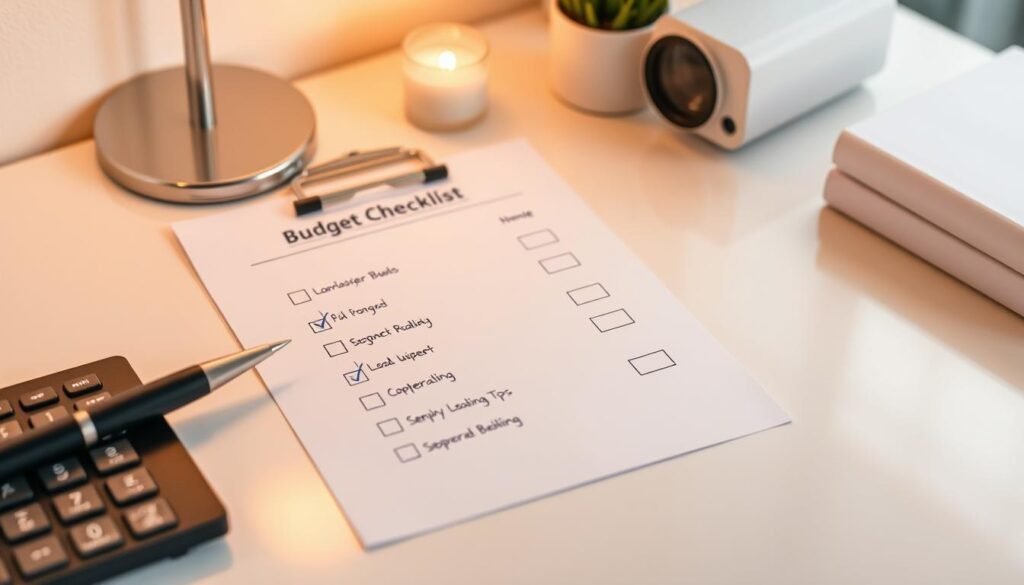
Scope, inclusions, and exclusions in the BOQ
List scope clearly: finishes, fixtures, MEP, and alternates by type so quotes are comparable. Call out exclusions such as site civils, access upgrades, or local approvals.
- Itemised BOQ to compare supplier offerings and avoid scope drift.
- Mark manufacturer-supplied items vs client-supplied items.
- State warranty activation conditions and acceptance criteria for each house unit.
Transport, installation, and on-site services
Price transport, cranage, and site-prep separately. Confirm crane windows, stacking area, and a site supervisor to speed installation during the construction window.
Permits, utilities, and final snag checks
Assign responsibility for permits, water, power, and waste hookups in writing. Use a snag checklist at handover and capture as-built drawings, product data, and maintenance guides.
| Milestone | Trigger | Payment |
|---|---|---|
| Factory progress | 80% QA complete | 30% |
| Dispatch | Modules shipped | 40% |
| Handover | Snag-free acceptance | 30% |
We recommend a 30–60 day post-handover review to close minor issues while crews are mobilized and to confirm the home performs as intended.
Conclusion
A clear procurement plan and tested building systems cut risk and speed delivery for modern buyers.
We recommend shortlisting two to three vendors, arranging site assessments, and asking for apples-to-apples quotes. Loom Crafts’ record—pods to 4BHK units, 45–90 day delivery, 80–90% factory completion, and a 20‑year structural/leakage warranty—shows what a reliable partner delivers.
Good BOQs, robust insulation and membranes, and factory QA pay back through comfort, lower operating bills, and easier maintenance. Quick-install units like EcoEase (₹8L shell, ₹10L ready) can jumpstart resorts and second living projects and scale as demand grows.
Use our checklist, verify delivery records, and lock milestones in writing. We find this approach turns research into action with confidence and speed.